
Published: July 2026
Category: Buying GuideExcerpt: Fishing line affects casting, sensitivity and fish-fighting performance. Compare braid, monofilament and fluorocarbon and learn when to use a leader.
Fishing line is the connection between the angler, lure and fish. Choosing the wrong line can reduce casting distance, weaken knots or make a lure behave unnaturally.
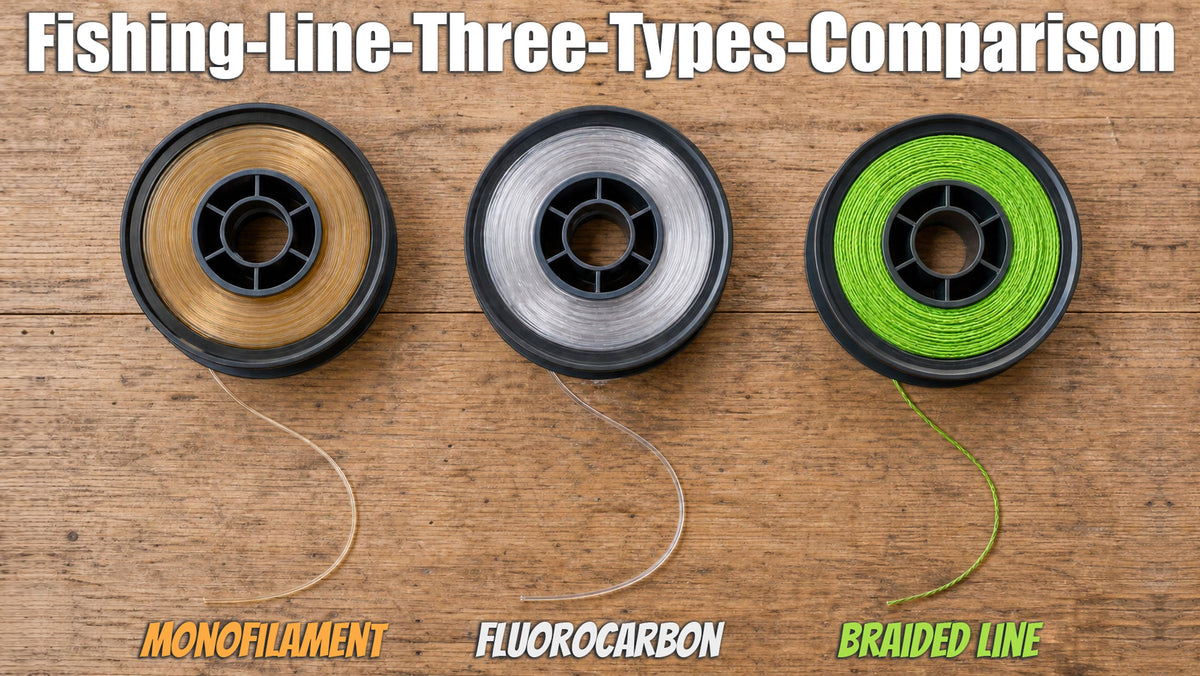
The three main line types—monofilament, fluorocarbon and braid—have different structures and performance characteristics. Understanding those differences is more useful than searching for one line that claims to do everything.

Monofilament Fishing Line

Monofilament is made from a single strand of nylon or a related polymer.
It is flexible, relatively easy to knot and usually less expensive than other line types. Its stretch helps absorb sudden movement from a fish, which can be useful when fishing with treble hooks or when beginners are learning to control drag pressure.
Monofilament is suitable for:
General freshwater fishing
Beginners
Topwater presentations
Treble-hook lures
Situations where some line stretch is helpful
Filling reel spools economically
Its disadvantages include lower sensitivity, larger diameter and more memory than braid. Exposure to sunlight and repeated stress can also reduce performance over time.
Because most monofilament is close to neutral buoyancy or slowly sinks, it works with a wide variety of presentations.
Fluorocarbon Fishing Line

Fluorocarbon is a single-strand line made from a denser fluoropolymer material.
It is valued for its low underwater visibility, abrasion resistance and relatively direct feel. Because it sinks, it is often selected for subsurface lures and bottom-contact techniques.
Fluorocarbon is suitable for:
Clear-water fishing
Leader material
Jigs and bottom-contact presentations
Fishing around rocks or abrasive structure
Situations where low line visibility is important
Fluorocarbon is generally stiffer than nylon monofilament. Thicker fluorocarbon can be difficult to manage on smaller spinning reels and may require extra attention when tying knots.
Not all fluorocarbon products are designed to be used as a full main line. Some are specifically made as leader material and may be stiffer or harder.
Braided Fishing Line
Braided line is constructed by weaving multiple synthetic fibers together.
It has a small diameter relative to its breaking strength and very little stretch. These characteristics provide strong sensitivity, solid hook-setting response and good line capacity.
Braid is suitable for:
Fishing around vegetation
Long-distance casting
Deep-water fishing
Techniques requiring high sensitivity
Heavy cover and strong fish
Situations where a thin, strong main line is useful
Because braid has very little stretch, sudden pressure can pull hooks free if the rod and drag do not absorb the shock. Its visibility may also be a disadvantage in clear water.
Braid can slip on a smooth reel spool if it is attached incorrectly. A backing layer or a spool designed for braid can prevent the entire line package from rotating around the spool.
Comparing the Three Line Types
Choose monofilament when you want easy handling, moderate stretch and an economical general-purpose line.
Choose fluorocarbon when low visibility, abrasion resistance and a sinking line are important.
Choose braid when you need high strength for its diameter, low stretch and maximum sensitivity.
Many anglers do not use only one material. A braided main line combined with a fluorocarbon or monofilament leader can provide the sensitivity of braid with a less visible or more abrasion-resistant final connection.
Choosing Line Strength
Fishing line strength is commonly described by its pound-test or kilogram rating. The rating should match the target fish, rod, reel and fishing environment.
Light line supports natural presentations and works well with small lures, but it provides less resistance to abrasion and sudden force.
Heavy line offers more pulling strength and durability but may reduce casting distance or make a small lure behave unnaturally.
Consider more than the size of the fish. Fishing around weeds, rocks, docks or submerged timber may require stronger line than fishing for the same species in open water.
Always check the recommended line range printed on the rod and the capacity shown on the reel spool.
Diameter Matters
Two lines with a similar breaking-strength rating may have different diameters.
Thinner line generally casts more easily and allows more line to fit on the reel. It can also help some lures reach greater depth.
Thicker line provides additional abrasion resistance and may be easier to handle, but it creates more air and water resistance.
When comparing fishing lines, diameter can be more informative than breaking strength alone.
When to Use a Leader

A leader is a separate section of line connected between the main line and the lure or hook.
A fluorocarbon leader may reduce visibility and provide abrasion resistance around rocks or structure.
A monofilament leader can add stretch and may be useful with topwater lures because it is less likely to pull the lure downward.
A heavier leader may be required for fish with sharp teeth, rough mouths or abrasive bodies. In some situations, wire leader material is the safer choice.
Leader length depends on water clarity, casting style and the type of connection knot being used.
Line Color
High-visibility line helps anglers watch for movement and detect bites. It is useful in low light, deep water or techniques where visual line control matters.
Low-visibility colors are intended to blend with the water or surrounding environment.
When using brightly colored braid, a clear or naturally colored leader can provide visibility above the water while keeping the final section less noticeable to fish.
Spooling and Maintenance
Fishing line should be installed under even tension. Loose line can dig into lower layers, create tangles and reduce casting performance.
Avoid overfilling the spool. Leave a small amount of space below the spool edge according to the reel design.
Inspect the final section of line regularly for cuts, flattening or rough areas. Remove damaged line before it fails.
Monofilament and fluorocarbon should be replaced when they become heavily coiled, cloudy, brittle or weakened. Braided line may last longer, but frayed or damaged sections should be removed.
Build the Line System Around the Technique

There is no single best fishing line for every situation.
A simple monofilament setup may be ideal for a beginner. A braid-to-fluorocarbon combination may suit an angler who wants sensitivity and low leader visibility. Heavy braid and an abrasion-resistant leader may be needed around dense vegetation or strong fish.
The correct line is the one that matches the reel, rod, lure, fishing environment and amount of control the angler needs.
Meta description: Compare braided, monofilament and fluorocarbon fishing line, including strength, diameter, visibility, leaders and the best uses for each type.